






















Odisha’s long war against Left-wing extremism enters its final phase as top Maoist leader Sukru surrenders. Discover the strategy behind this historic turnaround
Bhaskar Parichha
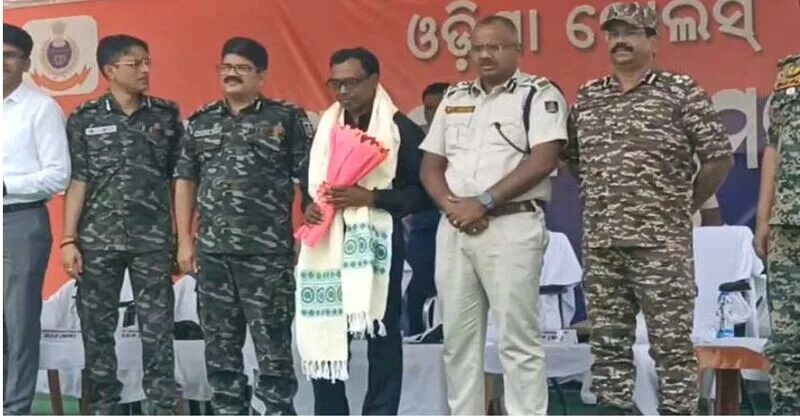
In a significant enhancement to Odisha’s anti-Maoist efforts, the wanted Maoist leader Sukru, also known as Kosha Sodhi, who had a bounty of Rs 55 lakh on his head, has voluntarily surrendered to the Kandhamal police along with four accomplices. He also laid down an AK-47 assault rifle.
Odisha’s long struggle against Left-wing extremism is now widely seen as entering its endgame phase—a remarkable turnaround from the years when large swathes of the state, especially in southern districts, were deeply affected by Maoist influence.
What stands out in this transition is how multiple forces converged over time rather than any single decisive blow.
First, the sustained and increasingly sophisticated security response played a central role. The Odisha Police, working closely with central forces like the Central Reserve Police Force and Border Security Force, shifted from reactive operations to intelligence-led, targeted interventions. Establishing forward operating bases in remote interiors—once considered inaccessible—allowed forces to dominate terrain that Maoists had long used as safe havens. Over time, this squeezed leadership networks and disrupted supply lines.
Second, the steady wave of surrenders significantly hollowed out the insurgency from within. By 2025–26, several mid- and senior-level cadres chose to lay down arms, weakening command structures and morale. Districts such as Malkangiri, Koraput, Nabarangpur, Bolangir, and Bargarh—once synonymous with Maoist activity—have progressively been declared free of extremist presence.
Infrastructure proved to be a quiet but transformative force. The construction of the Gurupriya Bridge in 2018 is often cited as a turning point. By connecting previously cut-off “cut-off areas,” it enabled not just troop movement but also the flow of markets, healthcare, and governance. Roads, telecommunications, and banking access followed, reducing the isolation that had historically enabled insurgent control.
Equally important has been the development push. Expansion of schools, tribal welfare schemes, livelihood programs, and basic services gradually eroded the socio-economic conditions that Maoists exploited for recruitment and local support. As governance began to reach deeper into rural and tribal belts, the legitimacy gap narrowed.
None of this came without cost. The sacrifice of 239 security personnel underscores the human price behind these gains, and their role remains central to the current stability.
By early 2026, Maoist activity in Odisha has been reduced to a few residual pockets, with only a handful of operatives reportedly active. While the trajectory clearly points toward a Naxal-free state, the final phase will likely depend on maintaining vigilance, preventing regrouping, and ensuring that development gains are sustained and inclusive.
(The author is a senior journalist and columnist. Views expressed are personal.)