

























Discover why swapping a glowing screen for a simple song can boost your child’s memory, language, and everyday happiness
OdishaPlus Health
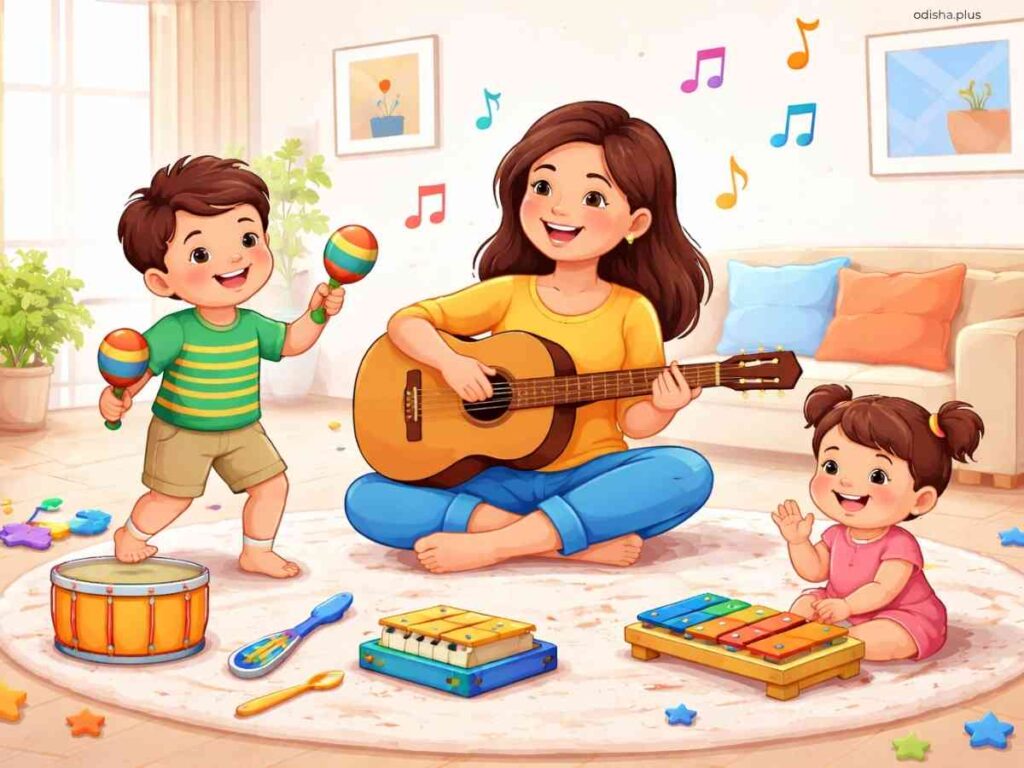
During the first few years of life, a child’s brain is growing faster than it ever will again, forming over a million new neural connections every second. While it is common today to hand a toddler a phone or tablet to keep them entertained, science reveals that we might be overlooking a much older, free, and incredibly powerful tool: music.
Whether it is a soft lullaby, a playful nursery rhyme, or a rhythmic tapping on a kitchen pot, music is “brain food” for toddlers. Here is a look at how music impacts a child’s mind and how you can use it to help them thrive.
Screen Time vs. Audio Time: What is the Difference?
It is easy to assume that watching a video with catchy music is the same as just listening to a song, but a child’s brain reacts very differently to each.
- Screen Time (Visual + Audio): Fast-paced videos often overstimulate a toddler. The rapid visual changes can trigger a mild “fight-or-flight” stress response, which can lead to fatigue, shorter attention spans, and tantrums when the screen is turned off. It is largely a passive activity where the brain just absorbs what is put in front of it.
- Audio Time (Music Only): Listening to music without a screen is an active mental process. It requires the child’s brain to imagine, focus, and process the sounds. Music forces the left and right sides of the brain to talk to each other, strengthening the tissue connecting them. Instead of overstimulating the child, music helps release “feel-good” chemicals like dopamine, which reduces stress and builds focus.
The Magic of Nursery Rhymes and Musical Styles
Different types of music impact a child’s brain and mood in unique ways. You do not need classical music to make a child smarter; everyday sounds and songs work wonders.
- Do Nursery Rhymes Create Happy Kids? Yes. Toddlers love routine and predictability. Nursery rhymes are highly repetitive, which makes them easy to learn. When a child successfully predicts the next word or sound, it gives them a burst of confidence and joy. Additionally, the rhyming patterns are a foundational tool for language; they teach children how to break sentences down into syllables and sounds.
- Upbeat and Dance Music: Fast, rhythmic music makes children want to move. This develops their gross motor skills, balance, and coordination.
- Soft, Slow Music (Lullabies): Gentle music activates the brain’s emotional centers in a soothing way. It helps regulate a child’s nervous system, lowering their heart rate and making it easier for them to transition to sleep or calm down after a crying fit.
How to Use Music as a Learning Tool
You do not need to be a trained musician or own expensive instruments to use music for learning.
- Boost Memory: Put information to a tune. Children remember the alphabet because it is a song. You can make up simple songs to remember phone numbers, names, or the days of the week.
- Create Smooth Routines: Transitioning from playing to eating or sleeping can cause friction. Creating a “clean-up song” or a “brushing teeth song” act as a gentle auditory cue that tells the brain what is coming next, reducing resistance.
- Teach Emotional Control: If a child is frustrated but lacks the vocabulary to express it, playing music can give them an outlet. Dancing aggressively to a fast drum beat or singing a silly song helps them release pent-up feelings safely.
The Age-by-Age Guide to Music and the Brain1 to 2 Years Old: The Movers and Mimics
At this stage, the brain is heavily focused on basic motor skills and recognizing sounds.
- The Impact: Music helps them find their balance and learn how their bodies move. Even if they cannot speak, their brains are decoding the building blocks of language by listening to the changing pitches in your voice.
- How to help: Sing simple, repetitive songs. Give them wooden spoons to tap on plastic bowls to explore cause-and-effect rhythms.
2 to 5 Years Old: The Language Explosion
This is the age of vocabulary building, immense imagination, and learning social rules.
- The Impact: Music deeply enhances language, memory, and concentration. This is also when children learn empathy and sharing. Singing in a group or taking turns shaking a tambourine teaches them cooperation without the pressure of “sharing toys.”
- How to help: Encourage them to make up their own silly songs. Sing songs with hand gestures (like “The Itsy Bitsy Spider”) to develop fine motor skills and hand-eye coordination.
Above 5 Years Old: The Complex Thinkers
As children enter school age, the brain begins to focus on higher-level logic, reasoning, and discipline.
- The Impact: Music practice at this age sharpens visual memory, math-related skills, and spatial intelligence. The brain learns how to wait, how to focus on a task, and how to read patterns.
- How to help: Introduce them to a wider variety of musical genres from different cultures. If possible, this is a great age to introduce learning a simple instrument, which teaches them that practice leads to progress.
(Disclaimer: This article was curated with the assistance of an AI tool and is intended solely to create mass awareness around early childhood development. Because every child is unique, this information is for educational purposes and should not replace professional medical advice. Always consult your pediatrician or a qualified healthcare provider before applying any new practices or advice directly to your toddler.)