
















Odisha emerges as a cultural and economic bridge in India’s Look East Policy, boosting trade, technology, and tourism with Southeast Asia
Bhaskar Parichha
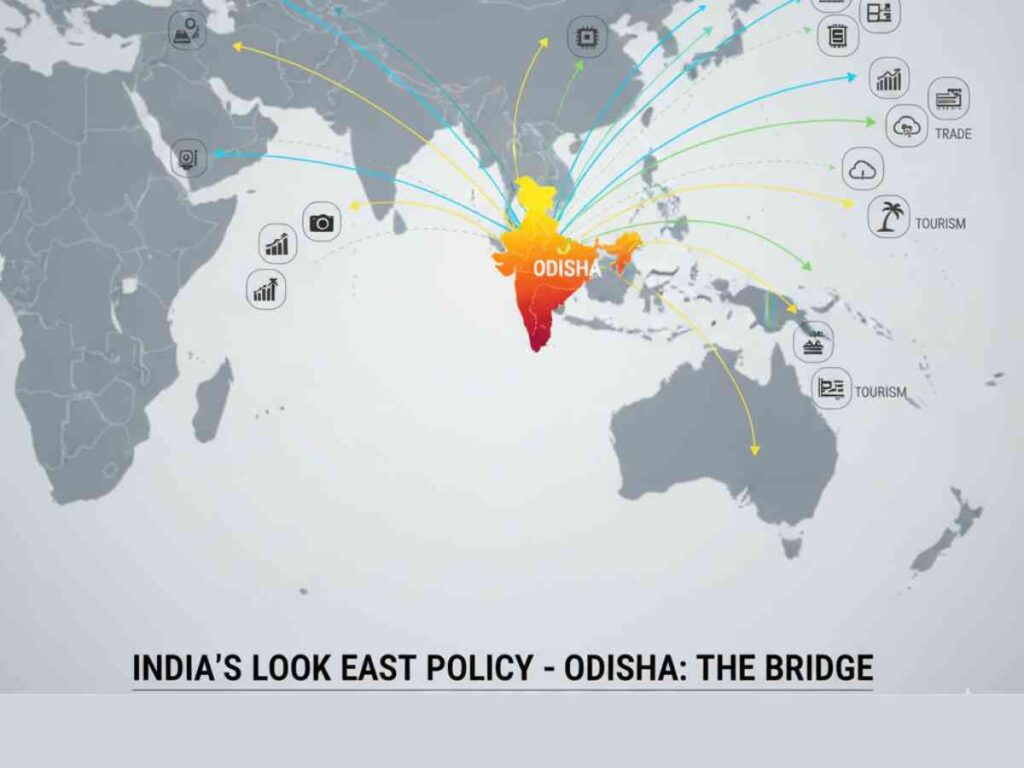
India’s Look East Policy (LEP), which was launched in 1991–1992 under the leadership of Prime Minister P.V. Narasimha Rao, marked a significant strategic pivot towards Southeast Asia and the broader Asia-Pacific region. This shift occurred in the context of the post-Cold War era and the disintegration of the Soviet Union.
The primary objective of the LEP was to strengthen India’s economic, political, and security ties with the member nations of the Association of Southeast Asian Nations (ASEAN), and it later expanded to encompass East Asian countries as well.
One of the key motivations behind this policy was to mitigate China’s growing influence in the region. Additionally, the LEP aimed to leverage India’s historical cultural connections, such as the shared heritage of Buddhism and the ancient trade routes that once linked these regions, to foster deeper relationships and cooperation.
The policy transformed into the more proactive Act East Policy in 2014 under Prime Minister Narendra Modi, focusing on tangible results in connectivity, trade, and infrastructure—illustrated by initiatives like the India-Myanmar-Thailand Trilateral Highway and the Mekong-Ganga Cooperation framework. The key objectives of the policy include increasing trade (with India-ASEAN trade reaching $131 billion in 2023) and investments. Additionally, it aims to enhance maritime security and energy collaboration, as well as to revive shared heritage to strengthen soft power.
Odisha, located on the eastern coast and boasting a 480-km shoreline along the Bay of Bengal, has longstanding connections to Southeast Asia, positioning it as a natural extension of India’s “Look East” initiative.
Historically known as Kalinga, this region was a significant maritime power, known for exporting spices, textiles, and Buddhist influences to areas such as Indonesia, Java, Sumatra, and Bali as early as the 2nd century BCE.
The renowned Bali Yatra, an annual festival held in Cuttack to honor these historical voyages, serves as a testament to this rich legacy, with traders journeying from Odisha’s ports to Southeast Asia.
In January 2025, External Affairs Minister S. Jaishankar emphasized this point at the 18th Pravasi Bharatiya Divas held in Bhubaneswar: “The Look East policy has its historical roots in this state. The Bali Yatra, which linked India to South East Asia, actually originated in Odisha.” This statement highlights that Odisha’s maritime heritage predates contemporary diplomacy, facilitating cultural interactions (for instance, Odia architectural influences in the temples of Bali) and establishing the state as a vital link for India’s Act East initiatives.
Odisha’s strategic location along the eastern coast of India makes it a vital ‘launchpad’ for the Act East initiative, particularly within the context of the government’s Purvodaya plan aimed at eastern development. The state is abundant in minerals, including bauxite and iron ore, and features significant ports such as Paradip, which has an impressive processing capacity of 135 million tonnes annually.
Additionally, Odisha is witnessing the growth of IT hubs, all of which play a crucial role in advancing the policy’s focus on the ‘3Ts’: Trade, Technology, and Tourism. External Affairs Minister Jaishankar emphasized Odisha’s potential as a key pillar in this initiative, urging investments from Non-Resident Indians (NRIs) and Persons of Indian Origin (PIOs) to enhance the value of local resources and improve connectivity in the region.
Odisha has established itself as a significant player in the realms of commerce and economics, particularly noted for its substantial exports of minerals and steel. The state’s strategic Paradip Port serves as a vital maritime link to the ASEAN region, facilitating trade and commerce. Additionally, Odisha has attracted considerable investments from South Korean companies, with a notable focus on the steel sector, exemplified by the involvement of POSCO.
The state is also actively engaged in the Trans-Asian Highway and Railway projects, enhancing its connectivity and trade potential. In 2024, trade relations with ASEAN experienced a remarkable 20% growth compared to the previous year, underscoring the state’s expanding economic ties with this important region.
Bhubaneswar is emerging as a significant center for information technology and IT-enabled services, particularly emphasizing the semiconductor sector and sustainable technological advancements. Collaborations with Singapore are being established to improve skill development in these areas. Additionally, Odisha’s 3T framework is strategically designed to attract foreign direct investment into the electronics industry, further bolstering the region’s economic growth.
Tourist attractions in the region, such as the beautiful beaches of Puri and Konark, the iconic Jagannath Temple, and a variety of vibrant festivals, play a crucial role in drawing visitors from Southeast Asia. The Bali Yatra festival, in particular, promotes cultural tourism and has led to an increase in inbound tourism from countries like Indonesia and Malaysia, aligning with the goals of the Act East policy.
The development of inland waterways and airports is a significant factor in strengthening the connectivity between Northeast India and Myanmar. Through the Sagarmala initiative, port facilities are being modernized, potentially leading to the launch of direct flights to destinations such as Hanoi and Bangkok.
However, there are still infrastructural issues, such as poorly developed roads to the Northeast, and security concerns in border regions. To address these challenges, the Inland Waterways Authority of India has proposed the creation of 25 new national waterways.
India is setting an ambitious target of achieving $500 billion in trade with the ASEAN nations by the year 2030. In this context, the role of Odisha is expected to expand significantly, particularly through the development of eco-tourism corridors and strategic agreements focused on renewable energy.
For example, potential solar energy partnerships with Vietnam could play a crucial role in this growth. Additionally, Odisha’s efforts in organizing events like the Pravasi Bharatiya Divas underscore its importance on the national stage, as it seeks to blend its rich historical heritage with modern economic aspirations.
(The author is a senior journalist and columnist. Views expressed are personal.)