


















Discover how over 50 pioneering startups at the Global Summit, at Bhubaneswar, are propelling India to the forefront of the global Blue Economy with sustainable, next-generation marine technologies
Nilambar Rath
The oceans, coasts, and inland waterways have long sustained human civilization, but today, they represent something much larger: the next great frontier for sustainable, futuristic, and technology-oriented economic growth.
The “Blue Economy” is rapidly emerging as the growth engine of India. Driven by a robust, dynamic, and fearless startup ecosystem, India is now leading the world in innovation and technology development within the marine, maritime, and coastal sectors. By shifting the focus toward the sustainable harnessing of ocean resources, the country is unlocking unprecedented economic and livelihood opportunities on a global scale.
Capitalizing on this strategic national advantage, the Bhubaneswar City Knowledge Innovation Cluster (BCKIC) Foundation—an initiative supported by the Office of the Principal Scientific Adviser to the Government of India—in partnership with the Government of Odisha and various national and international organizations, is hosting the 2-day Global Summit on Blue Economy. Taking place on March 13-14, 2026, in Bhubaneswar, this landmark summit is playing a pivotal role in shaping India’s marine future and showcasing future-ready innovators to the world.
While the startups in attendance are showcasing truly global technologies originating from all corners of the country, the host state of Odisha serves as a highly relevant backdrop. Blessed with an extensive coastline of over 500 kilometers, the state is uniquely positioned to harness the wealth of the ocean while prioritizing environmental sustainability and community livelihoods.
BCKIC has successfully curated a platform here that bridges the critical gap between conceptual innovation and real-world application. By bringing together a diverse spectrum of stakeholders—including top-tier policymakers, industry stalwarts, education and research institutions, and ambitious students—the summit acts as a vital crucible for collaborative dialogue and technological exchange.
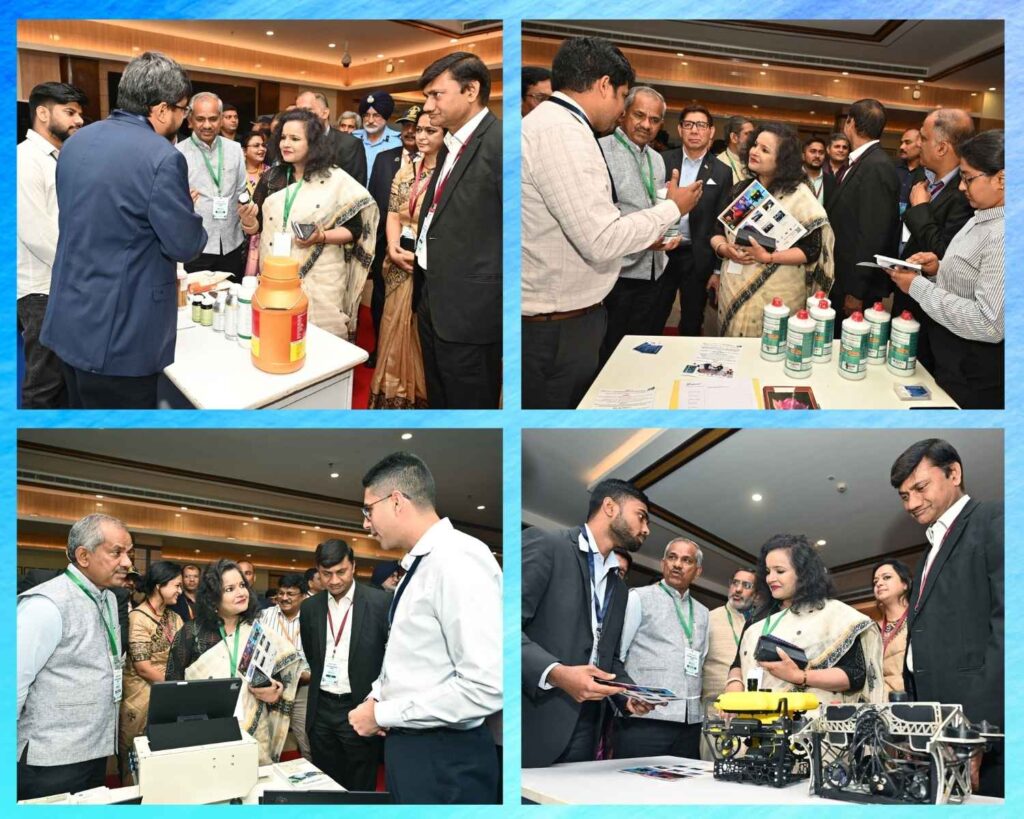
The undeniable centerpiece of this global summit is the Startup Pavilion. Showcasing over 50 deep-tech startups from across the country, the pavilion is a vibrant testament to India’s entrepreneurial spirit. Anu Garg, Chief Secretary, Government of Odisha, officially inaugurated the startup pavilion immediately following the event’s inaugural session, opening the doors to a showcase that spans the entire innovation spectrum.
These enterprises feature both deployment-ready technologies and early-commercialization concepts that are set to disrupt traditional marine industries.
Congratulating each startup for showcasing their bright ideas and transformative technologies, Dr. Mrutyunjay Suar, Chairman of BCKIC, emphasized the profound impact these young ventures will have on the global stage. Wishing them great success ahead, he stated, “I am sure, the summit will give them a great opportunity to connect with the world while serving the future and contributing to the blue economy sector largely.”
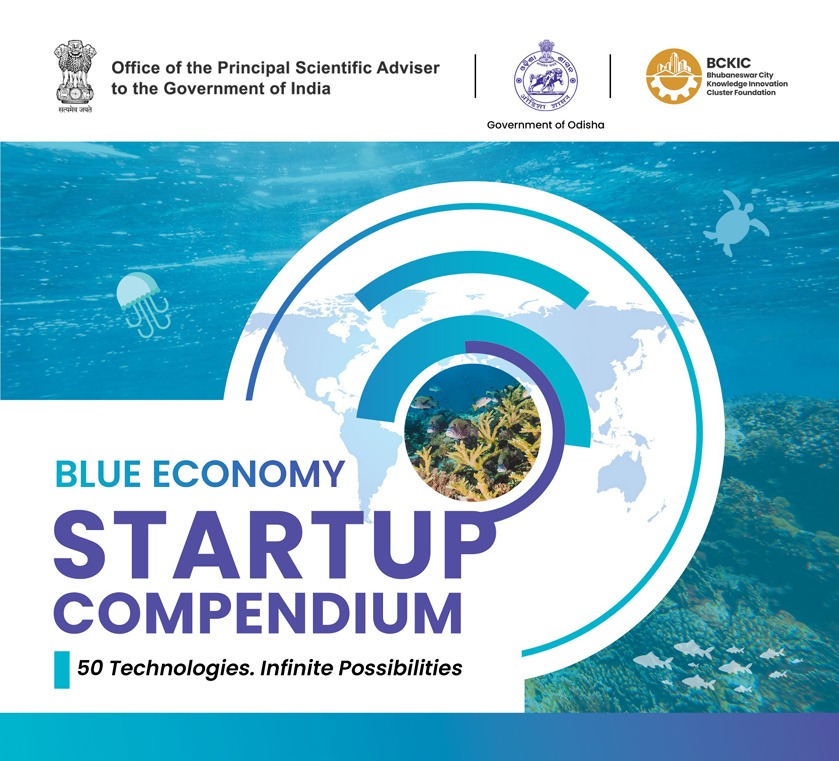
A deep dive into the Blue Economy Startup Compendium released at the event reveals the breathtaking uniqueness of the ideas and products these startups have built to take India’s Blue Economy vision forward.
In the realm of marine environment and climate tech, visionary companies like Vassar Labs and Aurassure are deploying AI-driven digital platforms for climate-resilient water resource management and hyperlocal coastal intelligence. These systems offer predictive governance, shifting the paradigm from reactive disaster response to proactive ecosystem protection.
In the marine fisheries and smart aquaculture space, technology is actively empowering the grassroots. Startups like Aqua Doctor Solutions have introduced integrated companion applications that provide rural inland and coastal farmers with critical knowledge, round-the-clock healthcare consultations for fish, and direct market linkages.
Similarly, Bariflo Cybernetics is introducing an Industry 5.0 Operating System for aquaculture, seamlessly integrating artificial intelligence, the Internet of Things (IoT), and robotics to ensure energy-efficient automation and real-time disease prediction. Adding to this modernization, Milatronics showcased its AI-based smart shrimp feeder, which uses underwater hydrophones to listen to shrimp feeding sounds, dispensing feed only when the animals are actively consuming—drastically reducing feed waste and improving water quality.
The summit also highlighted groundbreaking innovations in marine biotechnology and bio-based products. APChemi is tackling the global crisis of marine plastic pollution head-on by deploying modular pyrolysis infrastructure that converts hard-to-recycle coastal plastics into high-quality circular economy feedstock. Meanwhile, startups like Gocarin Industries are utilizing marine seaweed to develop climate-resilient livestock feed that reduces enteric methane emissions and mitigates heat stress, beautifully bridging the blue and green economies.
Even more promising are the early-commercialization startups that are aggressively pushing the boundaries of maritime security, coastal restoration, and autonomous operations. Alert24 has unveiled India’s first patent-filed, GPS-enabled smart life jacket. Integrated with an emergency alerting and geo-tracking system, it boasts an extended battery life of up to 20 days at sea, offering a vital lifeline to fishermen and inland waterway workers.
In the realm of autonomous marine navigation, Wroxai’s electric autonomous boat technology demonstrates how AI can enable fully driverless, zero-emission watercraft operations for tourism, transport, and defense. On the ecosystem front, NICO Nanobubble India is deploying low-carbon oxygenation technology to combat marine dead zones, restoring dissolved oxygen in polluted coastal waters without the use of harmful chemicals.
What makes this congregation of 50 startups so significant is their shared ethos: the convergence of profitability with profound purpose. Whether it is Crabionics building AI-driven modular systems for predictable mud crab production or Stratify 3D utilizing automated additive manufacturing to 3D-print bio-receptive artificial reefs for marine conservation, these enterprises are proving that economic viability does not have to come at the cost of the environment.
The Global Summit on Blue Economy 2026 is much more than just an exhibition of technology; it is a bold declaration of India’s readiness to build a sustainable, resilient, and highly profitable marine future. By fostering these future-ready startups, BCKIC, the Government of Odisha, and their partners are not just generating wealth—they are securing livelihoods, protecting fragile coastal ecosystems, and setting a global benchmark for the Blue Economy.
(About the Author: Nilambar Rath is a senior media professional and development communication expert with over three decades of experience across print, television, and online media. He is the Founder Editor & CEO of OdishaLIVE Media Network and aml Communications. A passionate advocate for the social impact sector, he is the co-founder of the IFI Foundation, focusing extensively on public health, environmental sustainability, and youth empowerment. Based in Bhubaneswar and a Charter Member of TiE Bhubaneswar, he actively leverages his rich expertise to champion the startup and entrepreneurship ecosystem, empowering the next generation of innovators and changemakers.)