
















Explore Odisha’s journey from ancient Kalinga to its formation on linguistic basis in 1936. Discover history, culture, leaders, and the significance of Utkal Divas
Tejeswar Patnaik
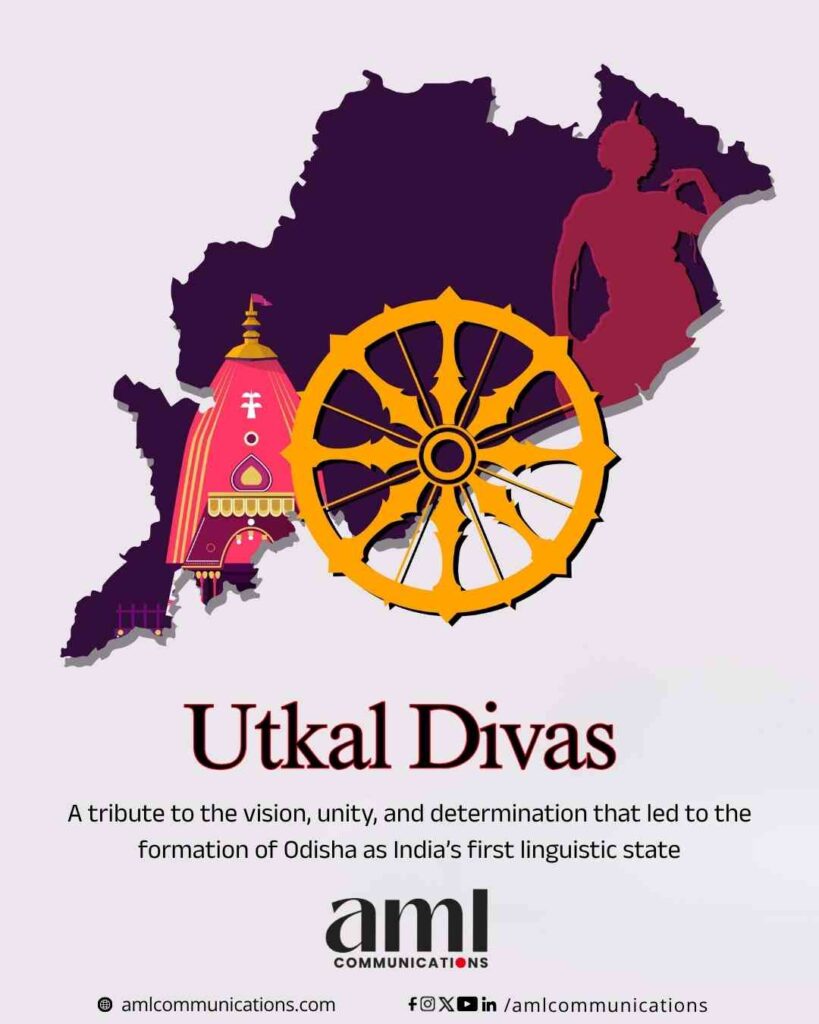
Odisha’s journey from its ancient roots as “Odra” and Kalinga to becoming the first province in India formed on a linguistic basis on April 1, 1936, is a remarkable saga of socio-cultural resilience amid centuries of political fragmentation. On this historic day, the Orissa Province was officially inaugurated, with Sir John Austen Hubback as its first Governor.
Historians trace the origin of the name “Odisha” primarily to the Sanskrit terms “Odra,” “Udra,” or “Odraka,” which find mention in ancient texts and epigraphs. The Greek writer Pliny the Elder also referred to a people called the “Oretes” in his work “Natural History” which some scholars associate with this region.
The spirit of Odia identity found enduring expression through literature and culture. Across centuries of political disunity, a galaxy of poets, writers, and reformers played a crucial role in preserving and strengthening this identity.
One of the earliest architects of Kalinga’s glory was Kharavela, the legendary ruler of the 1st century BCE. Known for his military conquests, patronage of Jainism, and contributions to art and infrastructure, he expanded Kalinga’s influence across regions. His accomplishments are recorded in the Hathigumpha inscription at Udayagiri in Prakrit. He is believed to have restored the sacred Kalinga Jina from Magadha, symbolising not just military victories but also the revival of Kalinga’s pride and cultural identity.
The Somavamsi (Keshari) dynasty (9th–12th centuries CE) brought political consolidation by unifying regions such as Kosala and Utkala. Great patrons of Shaivism, they built iconic temples in Bhubaneswar, including the Lingaraj Temple and the Mukteswara Temple, which remain masterpieces of Kalinga architecture.
The Eastern Ganga dynasty (11th–15th centuries) ushered in a golden age of art and architecture. This period witnessed the construction of monumental temples such as the Jagannath Temple and the Konark Sun Temple. Their rule blended devotion with artistic excellence, reflected in intricate carvings of dancers, musicians, and divine figures. Simultaneously, literary traditions flourished, with the Panchasakha enriching the Odia language and making it accessible to the masses.
The Gajapati dynasty, founded by Kapilendra Deva in 1435 CE, marked another milestone in Odisha’s history. A formidable ruler, he expanded the empire from the Ganga to the Kaveri. His successor, Purushottama Deva, continued this legacy of expansion and consolidation. This period also saw early efforts toward territorial unity.
However, the fall of the Gajapati dynasty in 1568 led to prolonged political fragmentation. Odisha split into regional kingdoms such as the Bhois of Khurdha, the Bhanjadeos of Mayurbhanj and Ghumsur, and the Chauhans of Sambalpur. Neither the Mughals nor the Marathas could restore unity, paving the way for colonial intervention.
In 1803, during the Second Anglo-Maratha War, the British East India Company occupied Odisha. By 1858, it came under direct British Crown rule, marking a new phase of colonial administration.
Odisha soon emerged as a centre of resistance. The Paika Rebellion, led by Buxi Jagabandhu Bidyadhar, is regarded as one of the earliest organised armed uprisings against British rule in India. Though suppressed, it reflected the deep-rooted spirit of resistance among the people. Tribal uprisings, including those in Ghumsur, further strengthened this sentiment. The impact of the Indian Rebellion of 1857 was also felt in Odisha, notably through the Sambalpur revolt led by Veer Surendra Sai.
To consolidate control, the British fragmented Odisha administratively by merging its regions with Bengal, Madras, and the Central Provinces, leading to the linguistic and cultural marginalisation of Odia-speaking people.
The devastating Orissa Famine of 1866, which claimed nearly a million lives, exposed colonial neglect and intensified demands for administrative unification. Further discontent arose in 1895 when Odia was replaced by Hindi in Sambalpur under the Central Provinces, triggering a strong linguistic movement. However, due to growing protests, the British administration reintroduced the Odia language in Sambalpur for official use.
The early 20th century witnessed a powerful cultural awakening. Intellectuals and reformers used literature, journalism, and education to mobilise public opinion. Fakir Mohan Senapati, the architect of Odia literature, safeguarded the Odia language through his brilliant writings, while Gourishankar Ray, through the Odia journal “Utkal Dipika” articulated the aspirations of millions of Odias.
The formation of the Utkal Sammilani in 1903 under Madhusudan Das, the pride of Odisha, marked a decisive phase in the movement, aiming to unite all Odia-speaking regions under one administration.
Another stalwart leader Gopabandhu Das further strengthened the movement through journalism and social reform. His newspaper “The Samaja”became a powerful medium of awareness. Nilakantha Das emerged as a strong advocate, presenting historical and financial arguments for a separate province.
A significant step came in 1912 with the formation of the Province of Bihar and Orissa, though it fell short of full unification. The movement gained further momentum after the Indian National Congress endorsed linguistic reorganisation in 1920.
Among princely rulers, Krushna Chandra Gajapati played a decisive role in presenting Odisha’s case before British authorities. Equally noteworthy was Sriram Chandra Bhanj Deo, whose progressive governance and support strengthened the cause of Odia unity.
As we celebrate the centenary of Odisha Diwas in 2036, the state government must strive for inclusive growth. The recognition of Odia as a classical language reflects its rich heritage. At the same time, there is a growing demand for greater recognition and promotion of Odissi music alongside its globally acclaimed classical dance tradition.
Odisha should also take pride in its abundant natural resources—its rich forests, vast mineral wealth, and long coastline—which offer immense potential for sustainable development.
Safeguarding Odisha’s interests remains equally crucial, particularly in inter-state issues such as the Mahanadi water dispute with Chhattisgarh and concerns over the Polavaram project with Andhra Pradesh. Our leaders, irrespective of their party affiliations, must rise above their differences to protect Odisha’s interests and identity.
Utkal Diwas is not merely a formal celebration of the past—it is a call to action. It urges every Odia to cherish our heritage by actively promoting the Odia language, culture, and traditions with pride and responsibility.
(Tejeswar Patnaik, former Deputy General Manager at Bank of India and columnist. Views expressed are personal.)