




















World Kidney Day 2026 highlights kidney health, early CKD detection and sustainable care to protect people and the planet from rising kidney disease
Bibekananda Kar
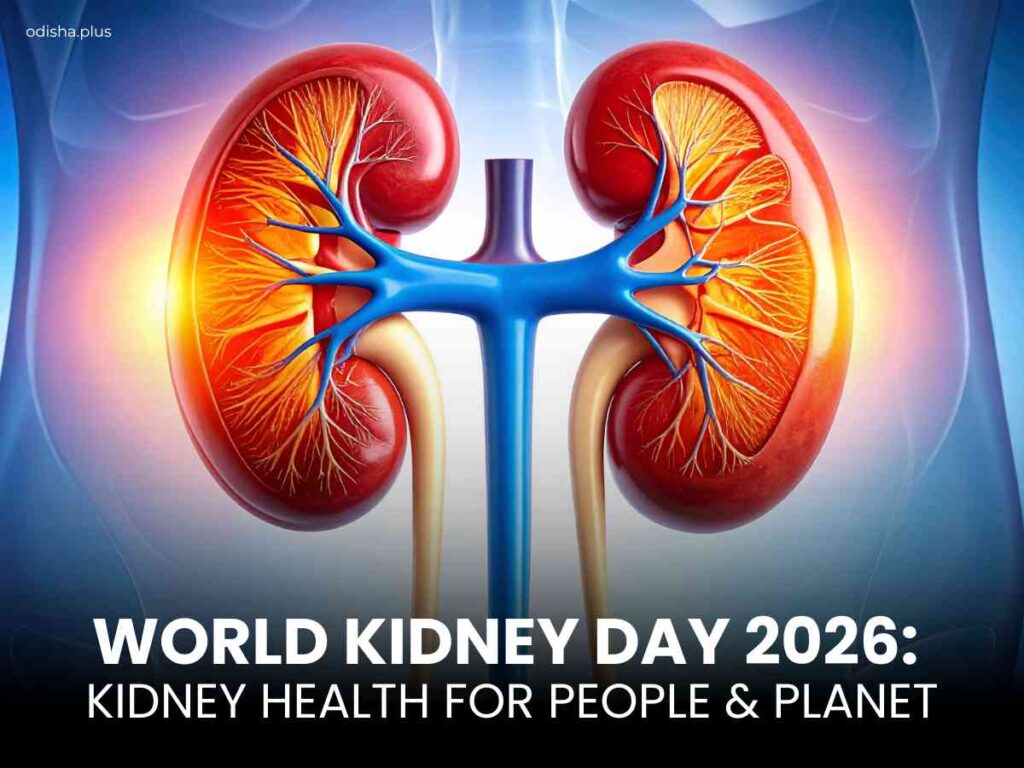
World Kidney Day (WKD) is a global health awareness initiative dedicated to highlighting the importance of kidney health and reducing the burden of kidney disease worldwide. Recently, CKD’s profile was raised by the World Health Organization Resolution on Kidney Health, approved at the 78th World Health Assembly, and the importance of World Kidney Day was acknowledged. It is celebrated annually on the 2nd Thursday in March, and the theme for this year focuses on expanding the outlook beyond individual health to include environmental sustainability. The theme of World Kidney Day 2026 is “Kidney health for All- Caring for People, Protecting the Planet.”
Approximately 850 million people worldwide are estimated to have kidney disease, most of whom live in low-income and lower-middle-income countries, and a large proportion lack access to kidney disease diagnosis, prevention, or treatment. As many as 9 out of 10 individuals with chronic kidney disease are unaware that they have this condition and therefore do not seek treatment. In contrast to cardiovascular disease, stroke, and respiratory disease, mortality due to kidney disease has been rising. Currently, kidney disease is the only non-communicable disease to exhibit an exponential rise in mortality. By 2040, CKD is projected to be the 5th highest cause of years of life lost (YLL) globally. Because kidneys often fail “silently” without pain or obvious symptoms, early screening is the only way to intervene and limit progression before it becomes irreversible.

Diabetes and hypertension—the leading causes of CKD—remain widely underdiagnosed and undertreated. Timely diagnosis and adequate treatment can retard the progression to kidney disease. A shift toward prevention as the cornerstone to sustainable kidney care. Lifestyle modification like avoidance of smoking, alcohol intake, weight reduction, avoiding exposure to over-the-counter pain killers, physical exercise, and avoiding exposure to heat, environmental pollution, and agrochemicals. Addressing these could significantly reduce the CKD burden. WKD promotes Eight Golden Rules for
kidney health—simple, actionable lifestyle measures: regular physical activity; healthy diet; adequate hydration; blood glucose control; blood pressure management; avoiding smoking; appropriate medications; and regular kidney function testing. The European Renal Association’s ABCDE initiative, highlighting albuminuria, blood pressure, cholesterol, diabetes, and estimated glomerular filtration rate as key warning signs, should be widely circulated.
Global warming raises the risk of heat stress and dehydration, which are major contributors to acute kidney injury and kidney stone development, and eventually progression to CKD. Outdoor workers exposed to extreme heat are particularly at risk. Mesoamerican nephropathy is a rapidly progressing form of CKD identified in agricultural workers in (sub)tropical climates. Tropical diseases, like malaria or dengue, as well as water-borne disorders, like leptospirosis or infectious diarrhea, all of which can cause acute kidney injury. Flood waters may also become nephrotoxic when contaminated with industrial pollutants. Additionally, fine particulate matter from industry, transport, and forest fires has been linked to the prevalence of CKD
In 2024, the 77th World Health Assembly adopted a landmark Resolution on Climate Change and Health, recognizing the environmental crisis as a major threat to human wellbeing and calling for climate-resilient, low-carbon health systems. The 78th Resolution specifically emphasized coordinated global action on the prevention of kidney disease. It supports planetary sustainability by delaying or avoiding dialysis or reducing the use of pharmaceuticals, the production of which also has an environmental footprint. If drugs delay the progression of CKD and the need for kidney replacement therapy (KRT), this may compensate for the carbon footprint of drug production.
Kidney Transplantation offers the best outcomes to individuals with kidney failure. Advancing access and sustainability in transplantation by increasing the donor pool and creating public awareness to increase kidney donation further would further reduce the economic burden and improve the health status.
In recent years, the environmental burden of dialysis has emerged as an added concern due to the environmental degradation in the form of its repetitive and long-lasting water and energy consumption, greenhouse gas emission, and plastic waste generation. 70% of health care–related greenhouse gas emissions stem from the supply chain, largely related to manufacturing, transport, and waste handling (dialysate and RO waste ). Urgent action is needed-investment in eco- friendly dialysis technologies, reducing toxicity from microplastics and eluates, while also improving the treatment experience by addressing stressors, like excessively noisy machines. Home-based therapies—peritoneal dialysis and most home hemodialysis regimens, except daily extended dialysis—offer environmental advantages versus in-center hemodialysis, including reduced patient and personnel transportation needs, lower energy consumption for room temperature control, lower reverse osmosis plant electricity consumption, and, with compact hemodialysis systems and peritoneal dialysis, less water consumption. Incremental dialysis may further decrease environmental burden, together with dialysate flow optimization. Peritoneal dialysis and existing compact hemodialysis systems can also help expand dialysis access in low-resource settings and in crisis.
Conservative care is particularly appropriate for frail and elderly people, many of whom show a rapid decline in functional status and increased mortality in the first year after dialysis start. Educational initiatives aimed at both people with kidney disease and health care professionals should increase awareness and understanding of conservative care. Policy makers and administrators need to recognize the cardio-kidney-metabolic cluster as a critical public health threat, prompting system redesign and promoting sustainable kidney care by strengthening the budget diversion to this health sector.
Patient empowerment via readily accessible smaller hospital-independent outpatient units, increased social workers’ involvement in consultations, and discussion groups with active patient participation are possible innovative options to increase awareness of conservative care and retarding the progression to kidney disease. Information in social media and pamphlets showing early warning signs of kidney disease, effective predialysis care, and post-dialysis precautionary measures should be circulated. Support from patient organizations could help to advance these evolutions. Avoidance of late referrals and fragmented care in low-resource settings seems cornerstone to start these evolutionary measures.
During natural disasters, patients often suffer more from communicable diseases and miss dialysis, which leads to life-threatening complications and increased mortality. With natural environmental disasters becoming more frequent and severe, kidney health should be integrated into disaster planning and emergency protocols. There is an urgent need for less resource-dependent treatment strategies. The traditional kidney care model aligned around in-center hemodialysis is no longer sustainable—ecologically, economically, and ethically.
Given the demographic and geopolitical trends, appropriate, well-planned screening, early detection, and prevention are the first and foremost steps to reach sustainability goals. These measures reduce complications, progression to advanced kidney disease, and the need for KRT. Prevention will ultimately also favor global health by mitigating the course of diseases frequently causing or complicating CKD and/or accelerated by CKD, significantly decreasing personal and societal problems
The recognition of kidney diseases as a global priority by the World Health Organization at the 78th World Health Assembly marks a pivotal moment. The 2026 WKD theme resolves to the embedding of kidney health and care within broader health and sustainability. it is an urgent, united call to prioritize kidney health as a pillar of a healthier, fairer, and more sustainable future. All stakeholders have to work together to achieve the goal of “Kidney Health for All”
(The writer is a Professor and HOD of Nephrology and Renal Transplantation, SCB Medical College, Cuttack. Views expressed are personal.)